Loading…
Reading the draws and working out what chance predicts.
US · TX · ball game
Latest drawThursday, 26 November 2026
Jackpot$200,000
Top prizeWon by one ticket
SourcesOnly Primary (commercial feed) reported this draw, so there is nothing to check it against. Settled 27 Nov 2026, 12:41 UTC.
4 numbers from 1–35, plus 1 from 1–35. 1,760 draws held here since 2010-01-04 — 123 under the current rules.
Texas Two Step changed its number pool then, which started a new era. Only the 123 draws since count towards number statistics — mixing draws from before a rule change would make any frequency meaningless.
Your numbers, read by every tool
Type the numbers you always play. Has the line ever come up? How close has Texas Two Step come? What has each number done, what does the line look like, and has the same set turned up anywhere else in the world?
Every tool, for this game
Each one opens with Texas Two Step already selected. The line under every title is true of this game’s rules right now — not a promise about its next draw.
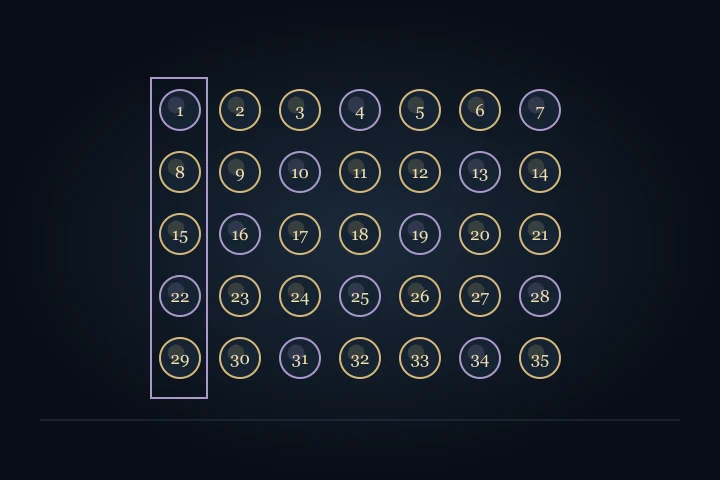
In 123 draws every number is expected about 14 times, and a ball favoured by more than 101% over its share would already have shown — see which ones strayed, and how far chance allows.

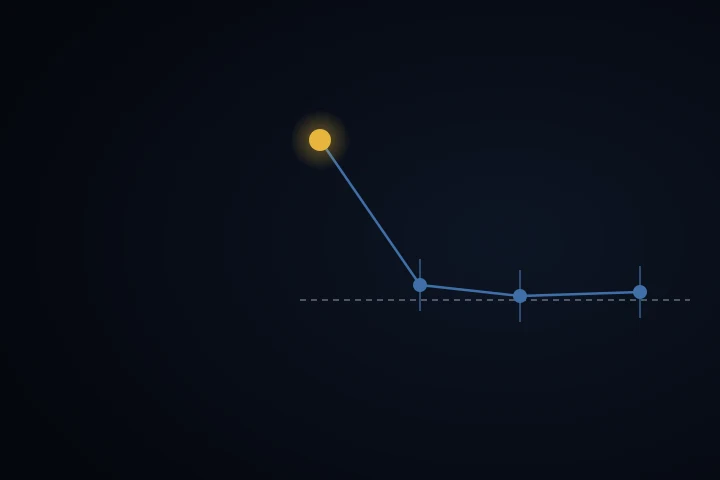
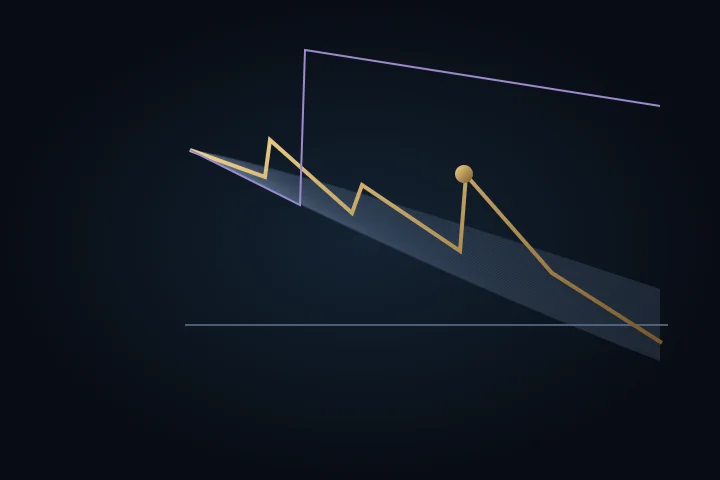
A number waits 9 draws on average; 5% of the time it waits 26 or more. It is never “due”.
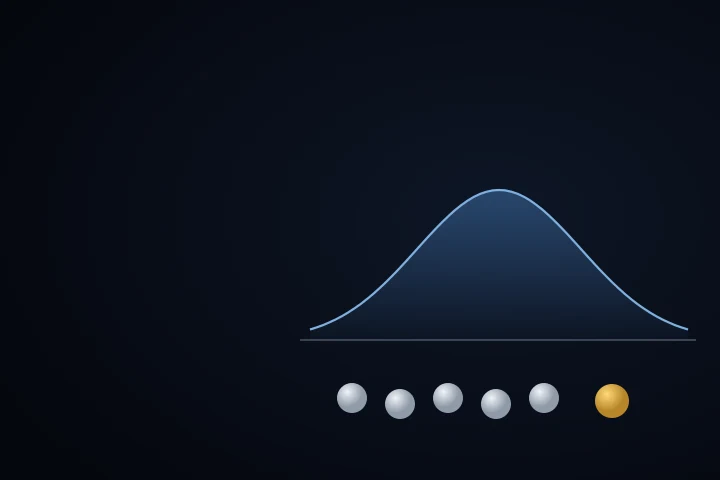
The 4 numbers add up to about 72, give or take 19. Most tickets sit in that bell — and so do most draws.
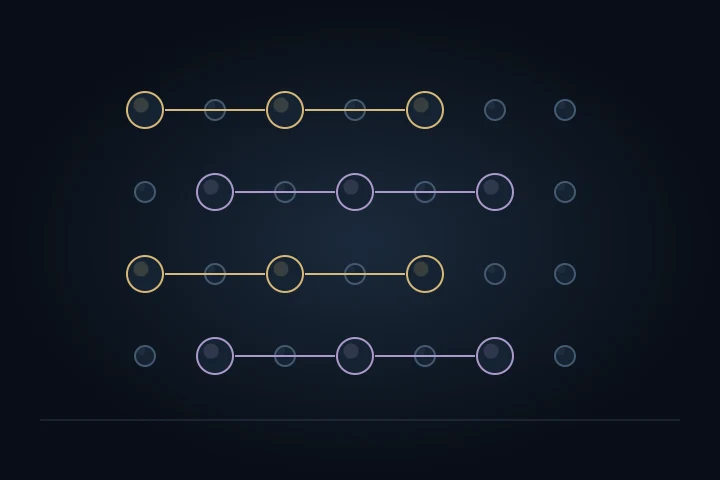
31.3% of draws contain two numbers side by side. That is the rules talking, not luck.
595 possible pairs, each expected together 1.2 times so far — and about 6 will look “special” by chance alone.
All 35 numbers as a constellation of who appeared with whom — indistinguishable from a shuffled sky.

40% of draws repeat a number from the draw before. A whole draw repeating: 13.4% likely by now.

Sorted, the numbers sit about 7.2 apart on average — and every “spread” you can name is exactly as likely as every other.
It takes about 35 draws for every one of the 35 numbers to appear at least once. The last few are the slow ones.
1,832,600 possible tickets. Every one has a face — and a typicality score you can look up.
Seven independent tests of randomness run live against all 123 draws. Any of them can fail; watch whether they do.

The lowest number lands near 7, the highest near 29. Position is a property of sorting, not of the balls.

4/35 rescaled onto the same axes as every other game here. One law, many machines.

Six documented cases of a beaten lottery. Not one involved patterns in past draws.

What the world believes about 7, 8, 13 and 17 — and what every machine says back.

At 30 million tickets, an average line keeps about 0% of a jackpot it wins. Unpopular numbers keep more — and still lose money.
A full wheel of 10 numbers here is 210 tickets. A guarantee is real; a profit is not.

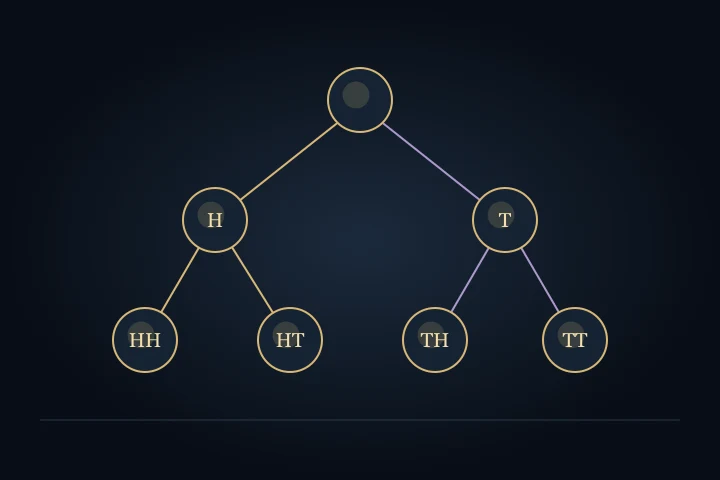
Five folk claims about 4/35 games, each answered with the closed form that kills it — never a tip for the next draw.
This is a without-replacement ball game; the Digit Laboratory is for Pick 3 and Pick 4.
Not for this game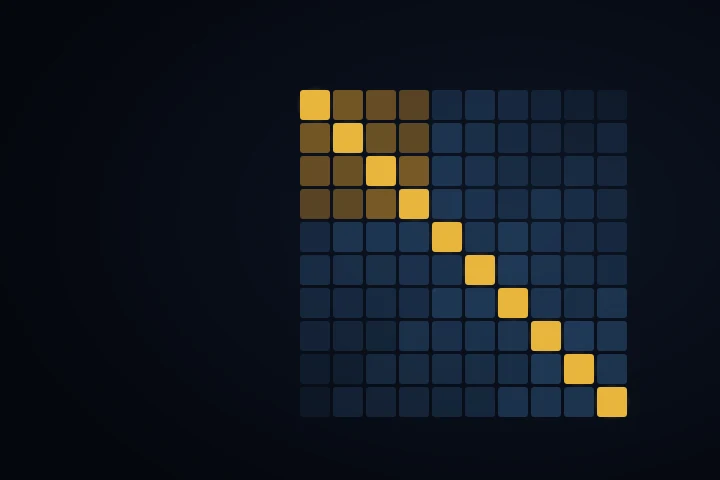
The Chernoff Map reads the straight tier of a digit game, which counts tickets on one exact number; a ball game has no such row.
Not for this game
This game draws once a day, so it has no second draw to compare its first with.
Not for this gameThis draw, read by every tool
What the site’s explorations say about the numbers drawn on 26 November 2026 — each beside what chance predicted. None of it says anything about the next draw.
Scored 39 of 100 across six shape features — more typical than about 20% of every possible ticket.
Times drawn before — chance expected 14 of each
Every number was expected about that many times after 122 draws, and they scatter around it. Warm means more than expected, cool means fewer — and a cold number arriving is exactly what cold numbers do.
Frequency Explorer →Shares 2 of 4 numbers (18, 19) and 0 of 1 stars with the draw of 2 November 2026 — its closest relative in 122 draws. Chance gave a match this close a 100% likelihood somewhere in that history.
From the draw just before (23 November 2026): 18 carried over. Chance says 40% of draws repeat at least one number. Stars: none repeated (3% expected).
Carry-over / Déjà Vu →The numbers add up to 54 — the 18th percentile of all possible tickets, around a middle of 72. Side-by-side numbers: 8–9, 18–19. 31% of draws have at least one such pair.
Sum Distribution →9 had not appeared for 12 draws. A number waits about 9 on average, and a wait this long was not a signal — the machine has no memory of it.
Gap & “Overdue” Tracker →A line like this is played about 2.0× as often as an average ticket — more popular than most. At 30 million tickets sold, a winner on these numbers would keep about 0% of the jackpot.
Illustrative model, calibrated to published studies — not live sales.
The Unpopular Numbers Edge →Where the money went
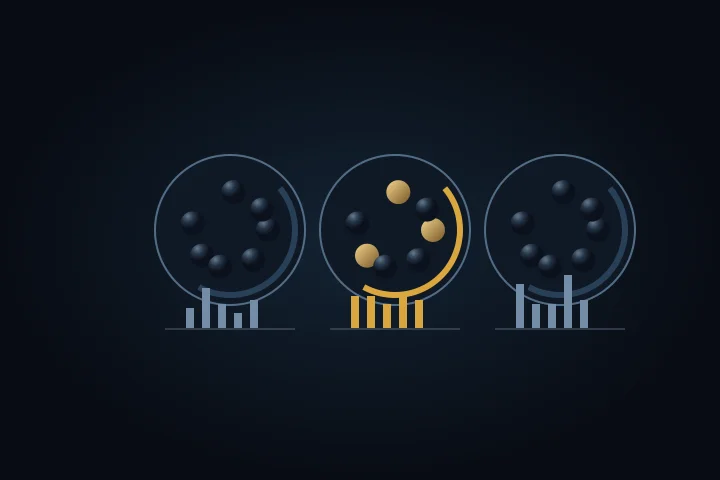
The rings take the ≈555k lines the counts imply and assume an evenly spread crowd. Furthest from that: Match 2 plus Bonus — 900 winners, 7% more than the 845 an even spread gives. The real crowd and an even spread agreed closely on this draw.
| Match | Winners | Prize each |
|---|---|---|
| Match 4 plus Bonus | 1 | $200,000 |
| Match 4 | 16 | $929 |
| Match 3 plus Bonus | 42 | $44.00 |
| Match 3 | 1,320 | $19.00 |
| Match 2 plus Bonus | 900 | $18.00 |
| Match 1 plus Bonus | 5,511 | $7.00 |
| Match 0 plus Bonus | 9,530 | $5.00 |
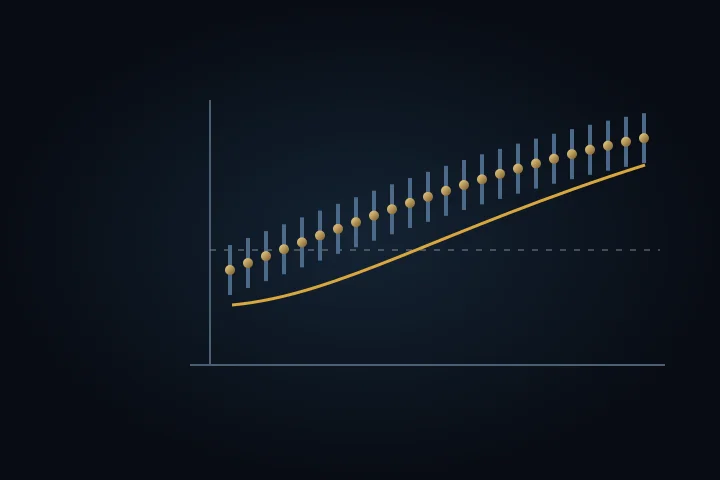
What the top prize has been, draw by draw. It climbs while nobody wins and drops to the floor when somebody does — the sawtooth every rollover game draws.
The jackpot has gone 0 draws without a winner. The typical wait here is 2.4 draws.
Happenedwhat chance predicts
Completed waits between wins, against the geometric law those waits follow if every draw is an independent chance at the jackpot. The law takes its one parameter from the waits themselves, so this compares shape, not level.
Open any draw to read it by every tool — the same six readings the latest result gets above, each against what chance predicted at the time.
| Draws waited | Happened | Chance says |
|---|---|---|
| 0 | 7 | 7.9 |
| 1 | 6 | 5.6 |
| 2 | 4 | 4.0 |
| 3 | 2 | 2.8 |
| 4 | 4 | 2.0 |
| 5 | 1 | 1.4 |
| 6 | 0 | 1.0 |
| 7 | 1 | 0.7 |
| 8 | 1 | 0.5 |
| 9 | 1 | 0.3 |
| 10+ | 0 | 0.8 |
Every number was expected about that many times after 122 draws, and they scatter around it. Warm means more than expected, cool means fewer — and a cold number arriving is exactly what cold numbers do.
Scored 57 of 100 across six shape features — more typical than about 57% of every possible ticket.
Times drawn before — chance expected 14 of each
Every number was expected about that many times after 121 draws, and they scatter around it. Warm means more than expected, cool means fewer — and a cold number arriving is exactly what cold numbers do.
Frequency Explorer →Shares 2 of 4 numbers (18, 34) and 0 of 1 stars with the draw of 9 November 2026 — its closest relative in 121 draws. Chance gave a match this close a 100% likelihood somewhere in that history.
From the draw just before (19 November 2026): 12 carried over. Chance says 40% of draws repeat at least one number. Stars: none repeated (3% expected).
Carry-over / Déjà Vu →The numbers add up to 97 — the 89th percentile of all possible tickets, around a middle of 72. Side-by-side numbers: 33–34. 31% of draws have at least one such pair.
Sum Distribution →33 had not appeared for 17 draws. A number waits about 9 on average, and a wait this long was not a signal — the machine has no memory of it.
Gap & “Overdue” Tracker →A line like this is played about 0.5× as often as an average ticket — less popular than most. At 30 million tickets sold, a winner on these numbers would keep about 0% of the jackpot.
Illustrative model, calibrated to published studies — not live sales.
The Unpopular Numbers Edge →Scored 40 of 100 across six shape features — more typical than about 21% of every possible ticket.
Times drawn before — chance expected 14 of each
Every number was expected about that many times after 120 draws, and they scatter around it. Warm means more than expected, cool means fewer — and a cold number arriving is exactly what cold numbers do.
Frequency Explorer →Shares 2 of 4 numbers (3, 12) and 0 of 1 stars with the draw of 14 September 2026 — its closest relative in 120 draws. Chance gave a match this close a 100% likelihood somewhere in that history.
From the draw just before (16 November 2026): nothing carried over. Chance says 40% of draws repeat at least one number. Stars: none repeated (3% expected).
Carry-over / Déjà Vu →The numbers add up to 47 — the 10th percentile of all possible tickets, around a middle of 72. Side-by-side numbers: 11–12. 31% of draws have at least one such pair.
Sum Distribution →11 had not appeared for 22 draws. A number waits about 9 on average, and a wait this long was not a signal — the machine has no memory of it.
Gap & “Overdue” Tracker →A line like this is played about 2.0× as often as an average ticket — more popular than most. At 30 million tickets sold, a winner on these numbers would keep about 0% of the jackpot.
Illustrative model, calibrated to published studies — not live sales.
The Unpopular Numbers Edge →Scored 70 of 100 across six shape features — more typical than about 86% of every possible ticket.
Times drawn before — chance expected 14 of each
Every number was expected about that many times after 119 draws, and they scatter around it. Warm means more than expected, cool means fewer — and a cold number arriving is exactly what cold numbers do.
Frequency Explorer →Shares 2 of 4 numbers (8, 15) and 0 of 1 stars with the draw of 29 October 2026 — its closest relative in 119 draws. Chance gave a match this close a 100% likelihood somewhere in that history.
From the draw just before (12 November 2026): nothing carried over. Chance says 40% of draws repeat at least one number. Stars: none repeated (3% expected).
Carry-over / Déjà Vu →The numbers add up to 68 — the 41th percentile of all possible tickets, around a middle of 72. No two numbers side by side. 31% of draws have at least one such pair.
Sum Distribution →25 had not appeared for 10 draws. A number waits about 9 on average, and a wait this long was not a signal — the machine has no memory of it.
Gap & “Overdue” Tracker →A line like this is played about 1.7× as often as an average ticket — more popular than most. At 30 million tickets sold, a winner on these numbers would keep about 0% of the jackpot.
Illustrative model, calibrated to published studies — not live sales.
The Unpopular Numbers Edge →Scored 34 of 100 across six shape features — more typical than about 13% of every possible ticket.
Times drawn before — chance expected 13 of each
Every number was expected about that many times after 118 draws, and they scatter around it. Warm means more than expected, cool means fewer — and a cold number arriving is exactly what cold numbers do.
Frequency Explorer →Shares 3 of 4 numbers (4, 10, 31) and 0 of 1 stars with the draw of 8 October 2026 — its closest relative in 118 draws. Chance gave a match this close a 25% likelihood somewhere in that history.
From the draw just before (9 November 2026): nothing carried over. Chance says 40% of draws repeat at least one number. Stars: none repeated (3% expected).
Carry-over / Déjà Vu →The numbers add up to 47 — the 10th percentile of all possible tickets, around a middle of 72. No two numbers side by side. 31% of draws have at least one such pair.
Sum Distribution →4 had not appeared for 10 draws. A number waits about 9 on average, and a wait this long was not a signal — the machine has no memory of it.
Gap & “Overdue” Tracker →A line like this is played about 1.9× as often as an average ticket — more popular than most. At 30 million tickets sold, a winner on these numbers would keep about 0% of the jackpot.
Illustrative model, calibrated to published studies — not live sales.
The Unpopular Numbers Edge →Scored 57 of 100 across six shape features — more typical than about 57% of every possible ticket.
Times drawn before — chance expected 13 of each
Every number was expected about that many times after 117 draws, and they scatter around it. Warm means more than expected, cool means fewer — and a cold number arriving is exactly what cold numbers do.
Frequency Explorer →This exact draw has happened before, on 27 November 2025. Chance gave a match this close a 0.2% likelihood somewhere in that history.
From the draw just before (5 November 2026): 18 carried over. Chance says 40% of draws repeat at least one number. Stars: none repeated (3% expected).
Carry-over / Déjà Vu →The numbers add up to 81 — the 66th percentile of all possible tickets, around a middle of 72. No two numbers side by side. 31% of draws have at least one such pair.
Sum Distribution →34 had not appeared for 14 draws. A number waits about 9 on average, and a wait this long was not a signal — the machine has no memory of it.
Gap & “Overdue” Tracker →A line like this is played about 0.5× as often as an average ticket — less popular than most. At 30 million tickets sold, a winner on these numbers would keep about 0% of the jackpot.
Illustrative model, calibrated to published studies — not live sales.
The Unpopular Numbers Edge →Scored 39 of 100 across six shape features — more typical than about 19% of every possible ticket.
Times drawn before — chance expected 13 of each
Every number was expected about that many times after 116 draws, and they scatter around it. Warm means more than expected, cool means fewer — and a cold number arriving is exactly what cold numbers do.
Frequency Explorer →Shares 2 of 4 numbers (18, 22) and 0 of 1 stars with the draw of 2 November 2026 — its closest relative in 116 draws. Chance gave a match this close a 100% likelihood somewhere in that history.
From the draw just before (2 November 2026): 18, 22 carried over. Chance says 40% of draws repeat at least one number. Stars: none repeated (3% expected).
Carry-over / Déjà Vu →The numbers add up to 81 — the 66th percentile of all possible tickets, around a middle of 72. Side-by-side numbers: 17–18. 31% of draws have at least one such pair.
Sum Distribution →24 had not appeared for 46 draws. A number waits about 9 on average, and a wait this long was not a signal — the machine has no memory of it.
Gap & “Overdue” Tracker →A line like this is played about 1.3× as often as an average ticket — more popular than most. At 30 million tickets sold, a winner on these numbers would keep about 0% of the jackpot.
Illustrative model, calibrated to published studies — not live sales.
The Unpopular Numbers Edge →Scored 33 of 100 across six shape features — more typical than about 11% of every possible ticket.
Times drawn before — chance expected 13 of each
Every number was expected about that many times after 115 draws, and they scatter around it. Warm means more than expected, cool means fewer — and a cold number arriving is exactly what cold numbers do.
Frequency Explorer →Shares 3 of 4 numbers (19, 22, 23) and 0 of 1 stars with the draw of 6 August 2026 — its closest relative in 115 draws. Chance gave a match this close a 24% likelihood somewhere in that history.
From the draw just before (29 October 2026): nothing carried over. Chance says 40% of draws repeat at least one number. Stars: none repeated (3% expected).
Carry-over / Déjà Vu →The numbers add up to 82 — the 68th percentile of all possible tickets, around a middle of 72. Side-by-side numbers: 18–19, 22–23. 31% of draws have at least one such pair.
Sum Distribution →22 had not appeared for 4 draws. A number waits about 9 on average, and a wait this long was not a signal — the machine has no memory of it.
Gap & “Overdue” Tracker →A line like this is played about 1.3× as often as an average ticket — more popular than most. At 30 million tickets sold, a winner on these numbers would keep about 0% of the jackpot.
Illustrative model, calibrated to published studies — not live sales.
The Unpopular Numbers Edge →Scored 55 of 100 across six shape features — more typical than about 52% of every possible ticket.
Times drawn before — chance expected 13 of each
Every number was expected about that many times after 114 draws, and they scatter around it. Warm means more than expected, cool means fewer — and a cold number arriving is exactly what cold numbers do.
Frequency Explorer →Shares 2 of 4 numbers (8, 15) and 0 of 1 stars with the draw of 1 October 2026 — its closest relative in 114 draws. Chance gave a match this close a 100% likelihood somewhere in that history.
From the draw just before (26 October 2026): 16 carried over. Chance says 40% of draws repeat at least one number. Stars: none repeated (3% expected).
Carry-over / Déjà Vu →The numbers add up to 71 — the 47th percentile of all possible tickets, around a middle of 72. Side-by-side numbers: 15–16. 31% of draws have at least one such pair.
Sum Distribution →32 had not appeared for 15 draws. A number waits about 9 on average, and a wait this long was not a signal — the machine has no memory of it.
Gap & “Overdue” Tracker →A line like this is played about 0.8× as often as an average ticket — less popular than most. At 30 million tickets sold, a winner on these numbers would keep about 0% of the jackpot.
Illustrative model, calibrated to published studies — not live sales.
The Unpopular Numbers Edge →Scored 57 of 100 across six shape features — more typical than about 57% of every possible ticket.
Times drawn before — chance expected 13 of each
Every number was expected about that many times after 113 draws, and they scatter around it. Warm means more than expected, cool means fewer — and a cold number arriving is exactly what cold numbers do.
Frequency Explorer →Shares 2 of 4 numbers (18, 19) and 0 of 1 stars with the draw of 10 September 2026 — its closest relative in 113 draws. Chance gave a match this close a 100% likelihood somewhere in that history.
From the draw just before (22 October 2026): nothing carried over. Chance says 40% of draws repeat at least one number. Stars: none repeated (3% expected).
Carry-over / Déjà Vu →The numbers add up to 56 — the 20th percentile of all possible tickets, around a middle of 72. Side-by-side numbers: 18–19. 31% of draws have at least one such pair.
Sum Distribution →16 had not appeared for 18 draws. A number waits about 9 on average, and a wait this long was not a signal — the machine has no memory of it.
Gap & “Overdue” Tracker →A line like this is played about 1.6× as often as an average ticket — more popular than most. At 30 million tickets sold, a winner on these numbers would keep about 0% of the jackpot.
Illustrative model, calibrated to published studies — not live sales.
The Unpopular Numbers Edge →Scored 69 of 100 across six shape features — more typical than about 85% of every possible ticket.
Times drawn before — chance expected 13 of each
Every number was expected about that many times after 112 draws, and they scatter around it. Warm means more than expected, cool means fewer — and a cold number arriving is exactly what cold numbers do.
Frequency Explorer →Shares 2 of 4 numbers (10, 29) and 0 of 1 stars with the draw of 28 May 2026 — its closest relative in 112 draws. Chance gave a match this close a 100% likelihood somewhere in that history.
From the draw just before (19 October 2026): nothing carried over. Chance says 40% of draws repeat at least one number. Stars: none repeated (3% expected).
Carry-over / Déjà Vu →The numbers add up to 60 — the 27th percentile of all possible tickets, around a middle of 72. No two numbers side by side. 31% of draws have at least one such pair.
Sum Distribution →20 had not appeared for 22 draws. A number waits about 9 on average, and a wait this long was not a signal — the machine has no memory of it.
Gap & “Overdue” Tracker →A line like this is played about 1.8× as often as an average ticket — more popular than most. At 30 million tickets sold, a winner on these numbers would keep about 0% of the jackpot.
Illustrative model, calibrated to published studies — not live sales.
The Unpopular Numbers Edge →Scored 67 of 100 across six shape features — more typical than about 79% of every possible ticket.
Times drawn before — chance expected 13 of each
Every number was expected about that many times after 111 draws, and they scatter around it. Warm means more than expected, cool means fewer — and a cold number arriving is exactly what cold numbers do.
Frequency Explorer →Shares 2 of 4 numbers (7, 22) and 0 of 1 stars with the draw of 17 August 2026 — its closest relative in 111 draws. Chance gave a match this close a 100% likelihood somewhere in that history.
From the draw just before (15 October 2026): nothing carried over. Chance says 40% of draws repeat at least one number. Stars: none repeated (3% expected).
Carry-over / Déjà Vu →The numbers add up to 64 — the 34th percentile of all possible tickets, around a middle of 72. Side-by-side numbers: 22–23. 31% of draws have at least one such pair.
Sum Distribution →7 had not appeared for 18 draws. A number waits about 9 on average, and a wait this long was not a signal — the machine has no memory of it.
Gap & “Overdue” Tracker →A line like this is played about 1.9× as often as an average ticket — more popular than most. At 30 million tickets sold, a winner on these numbers would keep about 0% of the jackpot.
Illustrative model, calibrated to published studies — not live sales.
The Unpopular Numbers Edge →