Loading…
Reading the draws and working out what chance predicts.
DE · DE · ball game
Latest drawWednesday, 25 November 2026
SourcesOnly Primary (commercial feed) reported this draw, so there is nothing to check it against. Settled 25 Nov 2026, 20:27 UTC.
6 numbers from 0–9. 226 draws held here since 2024-09-25.
Your numbers, read by every tool
Type the numbers you always play. Has the line ever come up? How close has Super 6 come? What has each number done, what does the line look like, and has the same set turned up anywhere else in the world?
Every tool, for this game
Each one opens with Super 6 already selected. The line under every title is true of this game’s rules right now — not a promise about its next draw.
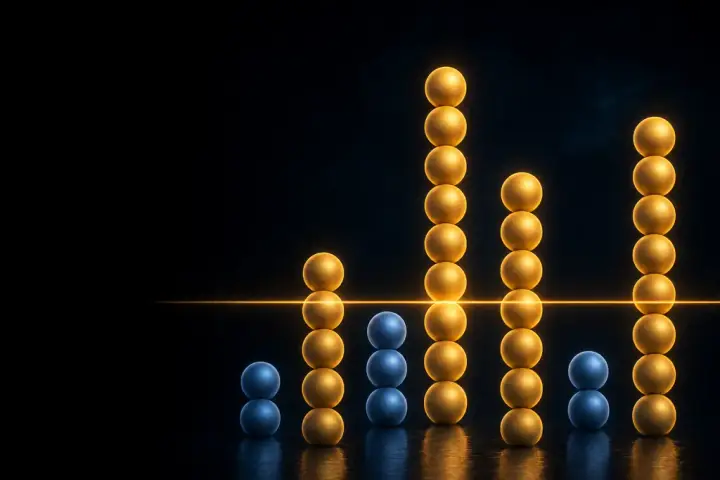
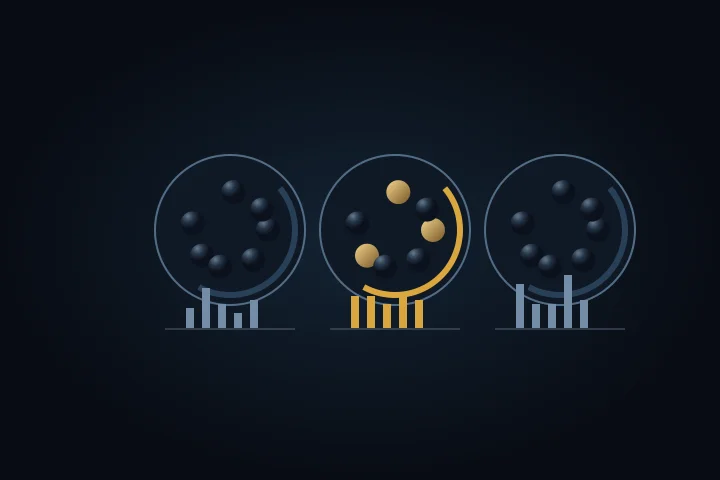
In 226 draws every number is expected about 136 times, and a ball favoured by more than 20% over its share would already have shown — see which ones strayed, and how far chance allows.

A number waits 2 draws on average; 3% of the time it waits 5 or more. It is never “due”.
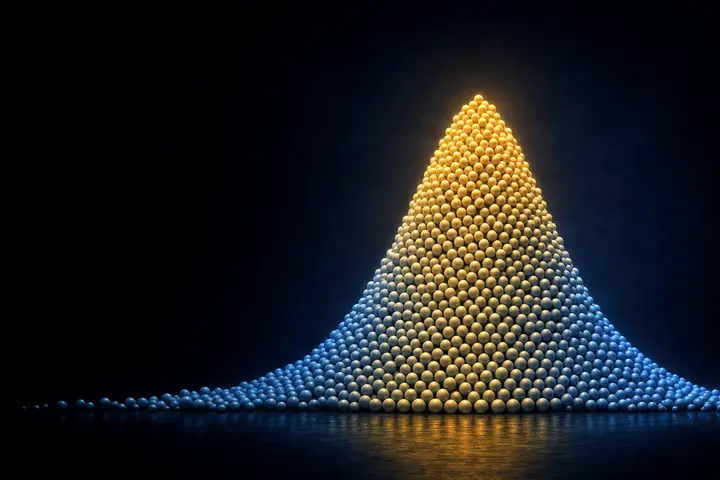
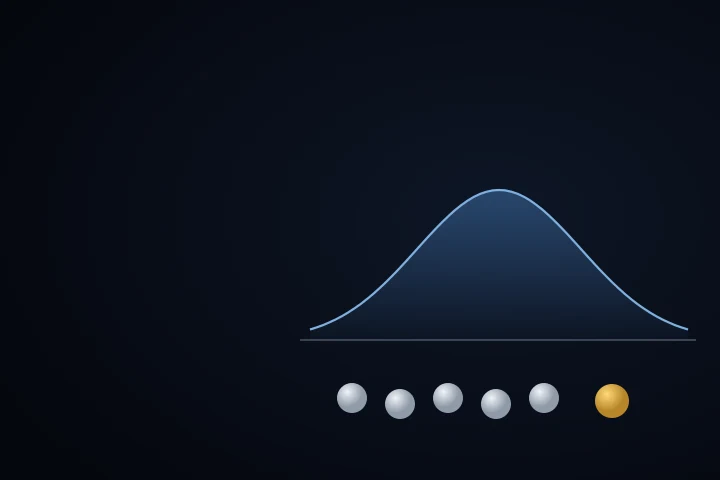
The 6 numbers add up to about 33, give or take 5. Most tickets sit in that bell — and so do most draws.

100.0% of draws contain two numbers side by side. That is the rules talking, not luck.

45 possible pairs, each expected together 75.3 times so far — and about 0 will look “special” by chance alone.

All 10 numbers as a constellation of who appeared with whom — indistinguishable from a shuffled sky.

100% of draws repeat a number from the draw before. A whole draw repeating: 100.0% likely by now.

Sorted, the numbers sit about 1.6 apart on average — and every “spread” you can name is exactly as likely as every other.
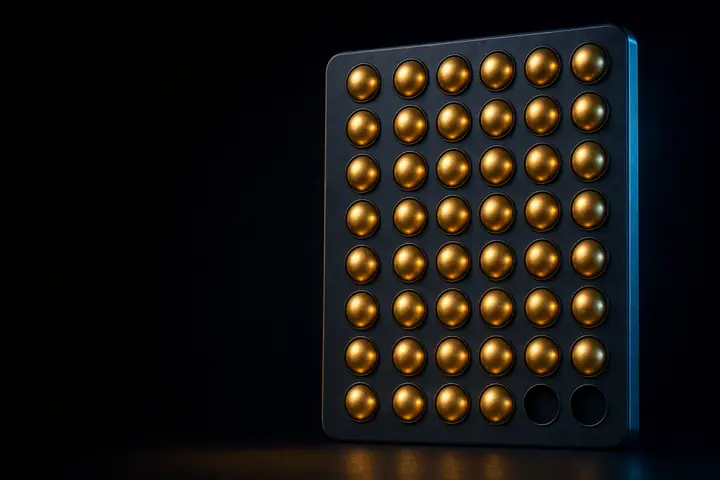
It takes about 4 draws for every one of the 10 numbers to appear at least once. The last few are the slow ones.

210 possible tickets. Every one has a face — and a typicality score you can look up.
Seven independent tests of randomness run live against all 226 draws. Any of them can fail; watch whether they do.

The lowest number lands near 2, the highest near 9. Position is a property of sorting, not of the balls.

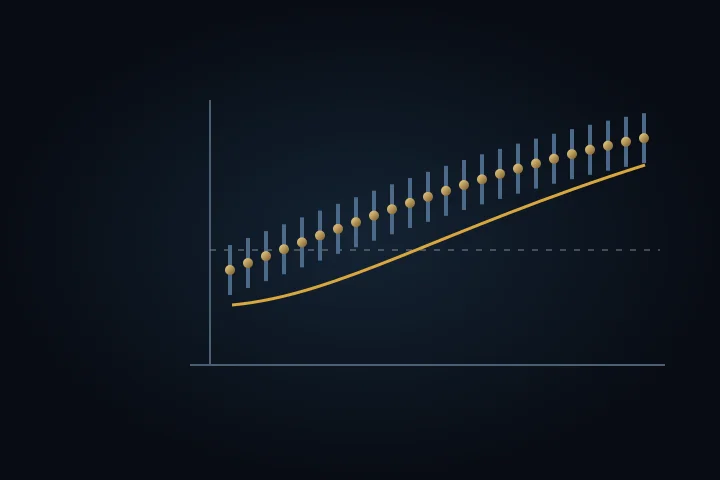
6/10 rescaled onto the same axes as every other game here. One law, many machines.

Six documented cases of a beaten lottery. Not one involved patterns in past draws.

What the world believes about 7, 8, 13 and 17 — and what every machine says back.

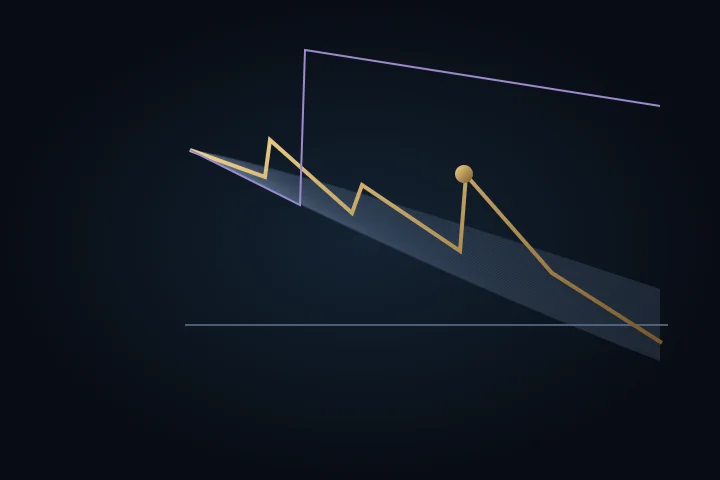
At 30 million tickets, an average line keeps about 0% of a jackpot it wins. Unpopular numbers keep more — and still lose money.
A full wheel of 10 numbers here is 210 tickets. A guarantee is real; a profit is not.

Five folk claims about 6/10 games, each answered with the closed form that kills it — never a tip for the next draw.

Lock a past-only rule, score it on later draws, and compare every hit with the exact 6-of-10 overlap law.
This is a without-replacement ball game; the Digit Laboratory is for Pick 3 and Pick 4.
Not for this game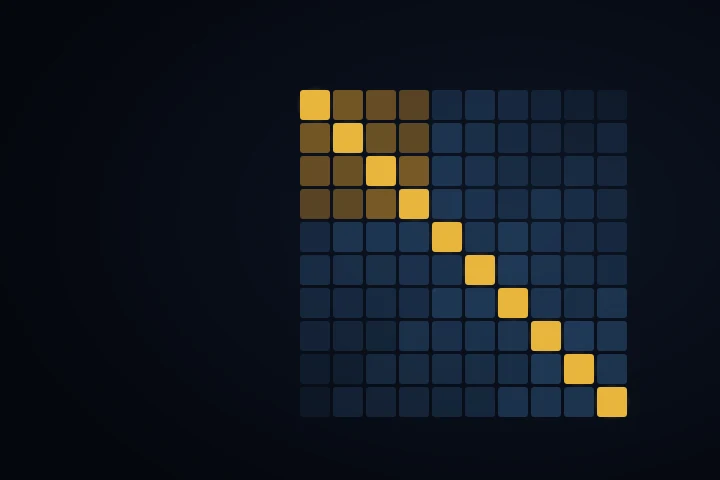
The Chernoff Map reads the straight tier of a digit game, which counts tickets on one exact number; a ball game has no such row.
Not for this game
This game draws once a day, so it has no second draw to compare its first with.
Not for this game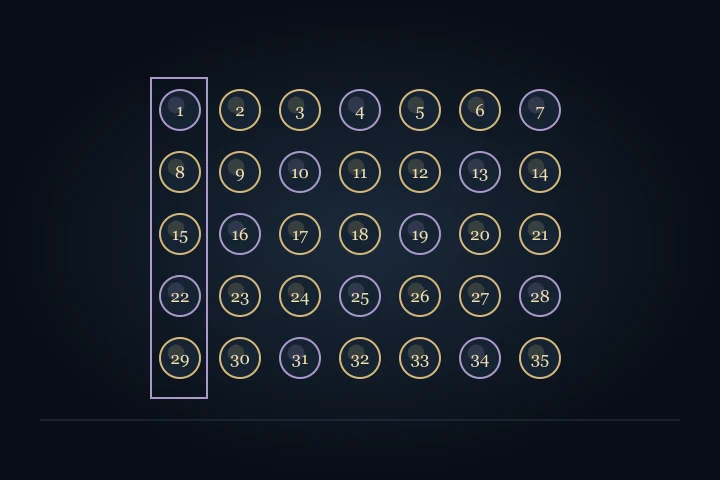
Combine primes, squares, Fibonacci numbers and sums. Count how much of chance your recipe describes.
Not for this game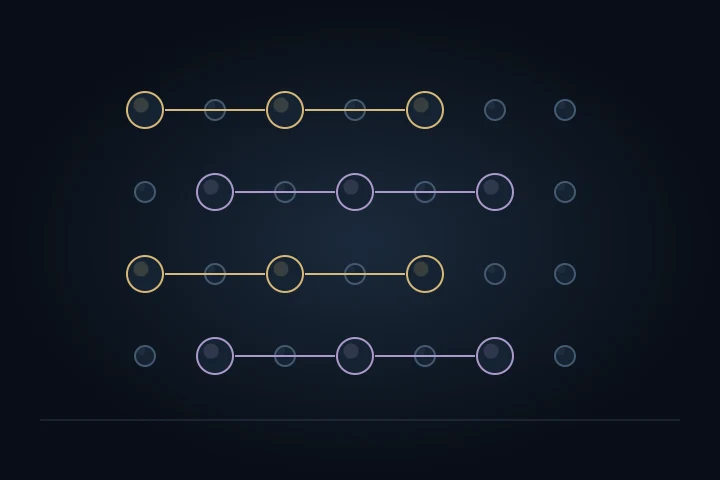
Find equal steps and mirror pairs in history, then grow a fair comparison.
Not for this gameThis draw, read by every tool
What the site’s explorations say about the numbers drawn on 25 November 2026 — each beside what chance predicted. None of it says anything about the next draw.
Scored 44 of 100 across six shape features — more typical than about 27% of every possible ticket.
Times drawn before — chance expected 135 of each
Every number was expected about that many times after 225 draws, and they scatter around it. Warm means more than expected, cool means fewer — and a cold number arriving is exactly what cold numbers do.
Frequency Explorer →This exact draw has happened before, on 18 November 2026. Chance gave a match this close a 66% likelihood somewhere in that history.
From the draw just before (21 November 2026): 2, 8, 8 carried over. Chance says 100% of draws repeat at least one number.
Carry-over / Déjà Vu →The numbers add up to 28 — the 54th percentile of all possible tickets, around a middle of 27. No two numbers side by side. 100% of draws have at least one such pair.
Sum Distribution →5 had not appeared for 3 draws. A number waits about 2 on average, and a wait this long was not a signal — the machine has no memory of it.
Gap & “Overdue” Tracker →A line like this is played about 1.3× as often as an average ticket — more popular than most. At 30 million tickets sold, a winner on these numbers would keep about 0% of the jackpot.
Illustrative model, calibrated to published studies — not live sales.
The Unpopular Numbers Edge →Open any draw to read it by every tool — the same six readings the latest result gets above, each against what chance predicted at the time.
Every number was expected about that many times after 225 draws, and they scatter around it. Warm means more than expected, cool means fewer — and a cold number arriving is exactly what cold numbers do.
Scored 42 of 100 across six shape features — more typical than about 21% of every possible ticket.
Times drawn before — chance expected 134 of each
Every number was expected about that many times after 224 draws, and they scatter around it. Warm means more than expected, cool means fewer — and a cold number arriving is exactly what cold numbers do.
Frequency Explorer →This exact draw has happened before, on 12 September 2026. Chance gave a match this close a 66% likelihood somewhere in that history.
From the draw just before (18 November 2026): 8, 8 carried over. Chance says 100% of draws repeat at least one number.
Carry-over / Déjà Vu →The numbers add up to 31 — the 76th percentile of all possible tickets, around a middle of 27. Side-by-side numbers: 2–3, 3–4. 100% of draws have at least one such pair.
Sum Distribution →4 had not appeared for 4 draws. A number waits about 2 on average, and a wait this long was not a signal — the machine has no memory of it.
Gap & “Overdue” Tracker →A line like this is played about 1.4× as often as an average ticket — more popular than most. At 30 million tickets sold, a winner on these numbers would keep about 0% of the jackpot.
Illustrative model, calibrated to published studies — not live sales.
The Unpopular Numbers Edge →Scored 17 of 100 across six shape features — more typical than about 0% of every possible ticket.
Times drawn before — chance expected 134 of each
Every number was expected about that many times after 223 draws, and they scatter around it. Warm means more than expected, cool means fewer — and a cold number arriving is exactly what cold numbers do.
Frequency Explorer →Shares 6 of 6 numbers (0, 0, 0, 0, 0, 8) with the draw of 10 June 2026 — its closest relative in 223 draws. Chance gave a match this close a 100% likelihood somewhere in that history.
From the draw just before (14 November 2026): nothing carried over. Chance says 100% of draws repeat at least one number.
Carry-over / Déjà Vu →The numbers add up to 8 — the 0th percentile of all possible tickets, around a middle of 27. No two numbers side by side. 100% of draws have at least one such pair.
Sum Distribution →0 had not appeared for 3 draws. A number waits about 2 on average, and a wait this long was not a signal — the machine has no memory of it.
Gap & “Overdue” Tracker →A line like this is played about 1.5× as often as an average ticket — more popular than most. At 30 million tickets sold, a winner on these numbers would keep about 0% of the jackpot.
Illustrative model, calibrated to published studies — not live sales.
The Unpopular Numbers Edge →Scored 24 of 100 across six shape features — more typical than about 2% of every possible ticket.
Times drawn before — chance expected 133 of each
Every number was expected about that many times after 222 draws, and they scatter around it. Warm means more than expected, cool means fewer — and a cold number arriving is exactly what cold numbers do.
Frequency Explorer →This exact draw has happened before, on 7 October 2026. Chance gave a match this close a 65% likelihood somewhere in that history.
From the draw just before (11 November 2026): 2, 3, 5, 7 carried over. Chance says 100% of draws repeat at least one number.
Carry-over / Déjà Vu →The numbers add up to 24 — the 24th percentile of all possible tickets, around a middle of 27. Side-by-side numbers: 1–2, 2–3, 5–6, 6–7. 100% of draws have at least one such pair.
Sum Distribution →6 had not appeared for 3 draws. A number waits about 2 on average, and a wait this long was not a signal — the machine has no memory of it.
Gap & “Overdue” Tracker →A line like this is played about 1.3× as often as an average ticket — more popular than most. At 30 million tickets sold, a winner on these numbers would keep about 0% of the jackpot.
Illustrative model, calibrated to published studies — not live sales.
The Unpopular Numbers Edge →Scored 49 of 100 across six shape features — more typical than about 32% of every possible ticket.
Times drawn before — chance expected 133 of each
Every number was expected about that many times after 221 draws, and they scatter around it. Warm means more than expected, cool means fewer — and a cold number arriving is exactly what cold numbers do.
Frequency Explorer →This exact draw has happened before, on 6 May 2026. Chance gave a match this close a 65% likelihood somewhere in that history.
From the draw just before (7 November 2026): nothing carried over. Chance says 100% of draws repeat at least one number.
Carry-over / Déjà Vu →The numbers add up to 32 — the 82th percentile of all possible tickets, around a middle of 27. Side-by-side numbers: 2–3, 7–8. 100% of draws have at least one such pair.
Sum Distribution →8 had not appeared for 4 draws. A number waits about 2 on average, and a wait this long was not a signal — the machine has no memory of it.
Gap & “Overdue” Tracker →A line like this is played about 1.7× as often as an average ticket — more popular than most. At 30 million tickets sold, a winner on these numbers would keep about 0% of the jackpot.
Illustrative model, calibrated to published studies — not live sales.
The Unpopular Numbers Edge →Scored 12 of 100 across six shape features — more typical than about 0% of every possible ticket.
Times drawn before — chance expected 132 of each
Every number was expected about that many times after 220 draws, and they scatter around it. Warm means more than expected, cool means fewer — and a cold number arriving is exactly what cold numbers do.
Frequency Explorer →This exact draw has happened before, on 2 May 2026. Chance gave a match this close a 65% likelihood somewhere in that history.
From the draw just before (4 November 2026): 9 carried over. Chance says 100% of draws repeat at least one number.
Carry-over / Déjà Vu →The numbers add up to 22 — the 13th percentile of all possible tickets, around a middle of 27. Side-by-side numbers: 0–1. 100% of draws have at least one such pair.
Sum Distribution →1 had not appeared for 3 draws. A number waits about 2 on average, and a wait this long was not a signal — the machine has no memory of it.
Gap & “Overdue” Tracker →A line like this is played about 1.2× as often as an average ticket — more popular than most. At 30 million tickets sold, a winner on these numbers would keep about 0% of the jackpot.
Illustrative model, calibrated to published studies — not live sales.
The Unpopular Numbers Edge →Scored 61 of 100 across six shape features — more typical than about 60% of every possible ticket.
Times drawn before — chance expected 131 of each
Every number was expected about that many times after 219 draws, and they scatter around it. Warm means more than expected, cool means fewer — and a cold number arriving is exactly what cold numbers do.
Frequency Explorer →This exact draw has happened before, on 14 October 2026. Chance gave a match this close a 65% likelihood somewhere in that history.
From the draw just before (31 October 2026): 5, 5, 6, 7, 9 carried over. Chance says 100% of draws repeat at least one number.
Carry-over / Déjà Vu →The numbers add up to 34 — the 91th percentile of all possible tickets, around a middle of 27. Side-by-side numbers: 5–6, 6–7. 100% of draws have at least one such pair.
Sum Distribution →2 had not appeared for 3 draws. A number waits about 2 on average, and a wait this long was not a signal — the machine has no memory of it.
Gap & “Overdue” Tracker →A line like this is played about 1.3× as often as an average ticket — more popular than most. At 30 million tickets sold, a winner on these numbers would keep about 0% of the jackpot.
Illustrative model, calibrated to published studies — not live sales.
The Unpopular Numbers Edge →Scored 54 of 100 across six shape features — more typical than about 41% of every possible ticket.
Times drawn before — chance expected 131 of each
Every number was expected about that many times after 218 draws, and they scatter around it. Warm means more than expected, cool means fewer — and a cold number arriving is exactly what cold numbers do.
Frequency Explorer →This exact draw has happened before, on 20 June 2026. Chance gave a match this close a 65% likelihood somewhere in that history.
From the draw just before (28 October 2026): 5, 6 carried over. Chance says 100% of draws repeat at least one number.
Carry-over / Déjà Vu →The numbers add up to 30 — the 70th percentile of all possible tickets, around a middle of 27. Side-by-side numbers: 5–6, 6–7. 100% of draws have at least one such pair.
Sum Distribution →7 had not appeared for 4 draws. A number waits about 2 on average, and a wait this long was not a signal — the machine has no memory of it.
Gap & “Overdue” Tracker →A line like this is played about 1.5× as often as an average ticket — more popular than most. At 30 million tickets sold, a winner on these numbers would keep about 0% of the jackpot.
Illustrative model, calibrated to published studies — not live sales.
The Unpopular Numbers Edge →Scored 48 of 100 across six shape features — more typical than about 30% of every possible ticket.
Times drawn before — chance expected 130 of each
Every number was expected about that many times after 217 draws, and they scatter around it. Warm means more than expected, cool means fewer — and a cold number arriving is exactly what cold numbers do.
Frequency Explorer →This exact draw has happened before, on 18 March 2026. Chance gave a match this close a 65% likelihood somewhere in that history.
From the draw just before (24 October 2026): 6, 8 carried over. Chance says 100% of draws repeat at least one number.
Carry-over / Déjà Vu →The numbers add up to 25 — the 30th percentile of all possible tickets, around a middle of 27. Side-by-side numbers: 4–5, 5–6. 100% of draws have at least one such pair.
Sum Distribution →5 had not appeared for 6 draws. A number waits about 2 on average, and a wait this long was not a signal — the machine has no memory of it.
Gap & “Overdue” Tracker →A line like this is played about 1.2× as often as an average ticket — more popular than most. At 30 million tickets sold, a winner on these numbers would keep about 0% of the jackpot.
Illustrative model, calibrated to published studies — not live sales.
The Unpopular Numbers Edge →Scored 49 of 100 across six shape features — more typical than about 31% of every possible ticket.
Times drawn before — chance expected 130 of each
Every number was expected about that many times after 216 draws, and they scatter around it. Warm means more than expected, cool means fewer — and a cold number arriving is exactly what cold numbers do.
Frequency Explorer →This exact draw has happened before, on 14 October 2026. Chance gave a match this close a 64% likelihood somewhere in that history.
From the draw just before (21 October 2026): 6, 6 carried over. Chance says 100% of draws repeat at least one number.
Carry-over / Déjà Vu →The numbers add up to 34 — the 91th percentile of all possible tickets, around a middle of 27. Side-by-side numbers: 2–3, 8–9. 100% of draws have at least one such pair.
Sum Distribution →3 had not appeared for 13 draws. A number waits about 2 on average, and a wait this long was not a signal — the machine has no memory of it.
Gap & “Overdue” Tracker →A line like this is played about 1.4× as often as an average ticket — more popular than most. At 30 million tickets sold, a winner on these numbers would keep about 0% of the jackpot.
Illustrative model, calibrated to published studies — not live sales.
The Unpopular Numbers Edge →Scored 11 of 100 across six shape features — more typical than about 0% of every possible ticket.
Times drawn before — chance expected 129 of each
Every number was expected about that many times after 215 draws, and they scatter around it. Warm means more than expected, cool means fewer — and a cold number arriving is exactly what cold numbers do.
Frequency Explorer →Shares 4 of 6 numbers (0, 4, 4, 4) with the draw of 10 June 2026 — its closest relative in 215 draws. Chance gave a match this close a 100% likelihood somewhere in that history.
From the draw just before (17 October 2026): 0, 4, 4, 4, 6, 6 carried over. Chance says 100% of draws repeat at least one number.
Carry-over / Déjà Vu →The numbers add up to 24 — the 24th percentile of all possible tickets, around a middle of 27. No two numbers side by side. 100% of draws have at least one such pair.
Sum Distribution →0 had not appeared for 1 draws. A number waits about 2 on average, and a wait this long was not a signal — the machine has no memory of it.
Gap & “Overdue” Tracker →A line like this is played about 1.1× as often as an average ticket — about as popular as most. At 30 million tickets sold, a winner on these numbers would keep about 0% of the jackpot.
Illustrative model, calibrated to published studies — not live sales.
The Unpopular Numbers Edge →Scored 40 of 100 across six shape features — more typical than about 16% of every possible ticket.
Times drawn before — chance expected 128 of each
Every number was expected about that many times after 214 draws, and they scatter around it. Warm means more than expected, cool means fewer — and a cold number arriving is exactly what cold numbers do.
Frequency Explorer →This exact draw has happened before, on 12 August 2026. Chance gave a match this close a 64% likelihood somewhere in that history.
From the draw just before (14 October 2026): 2, 6 carried over. Chance says 100% of draws repeat at least one number.
Carry-over / Déjà Vu →The numbers add up to 20 — the 6th percentile of all possible tickets, around a middle of 27. Side-by-side numbers: 0–1, 1–2, 6–7. 100% of draws have at least one such pair.
Sum Distribution →0 had not appeared for 4 draws. A number waits about 2 on average, and a wait this long was not a signal — the machine has no memory of it.
Gap & “Overdue” Tracker →A line like this is played about 1.3× as often as an average ticket — more popular than most. At 30 million tickets sold, a winner on these numbers would keep about 0% of the jackpot.
Illustrative model, calibrated to published studies — not live sales.
The Unpopular Numbers Edge →