LotteryOracle
GamesForecastPlaygroundCase filesMy numbers

Loading…

Reading the draws and working out what chance predicts.

LotteryOracle

LotteryOracle reports what happened; it does not predict what is next. Every draw is independent — no number is ever "due".

GamesPlaygroundCase filesThe weekDataAboutMethodologyPrivacy
Built byejoyful

Responsible play.A lottery costs more than it pays back; if it stops being fun, help is free and confidential:🇨🇦 1-866-531-2600all helplines →

CA · QC · ball game

Québec Max

The operator’s own page

On this page
  • Latest draw
  • Next draw
  • This draw, read by every tool
  • Your numbers
  • Tools
  • Prize ladder
  • Jackpot
  • Recent draws
  • Rule eras

Latest drawFriday, 9 October 2026

Single source
  1. 3
  2. 8
  3. 9
  4. 16
  5. 18
  6. 22
  7. 44
  8. 6

JackpotCA$2,000,000

Top prizeNot won — 1 draws unwon

SourcesOnly Primary (commercial feed) reported this draw, so there is nothing to check it against. Settled 10 Oct 2026, 07:52 UTC.

  • Primarycommercial feed13 Oct 2026, 23:27 UTC

Next drawFriday, 16 October 202622:30 Montreal time · schedule not confirmed

–days–hrs–min–sec


What it will look like — before a single ball moves

Every number14% chance each

All 50 numbers have the same chance of coming out — including the ones that have waited longest:

4030332218154914912

Draws since each last appeared. A wait is not a debt: the machine keeps no ledger.

The total142–215

The main numbers will add up to somewhere in this band in about 69% of draws, around a middle of 179. Most tickets sit there too, so it is no edge.

Shape3 odd + 4 even, or the reverse

The likeliest split, at 58%. And a 62% chance that two numbers come out side by side — the rules talking, not luck.

Déjà vu68% chance of a repeat

That at least one of the latest draw’s numbers (1, 12, 15, 21, 34, 35, 50) comes straight back. Repeats are ordinary; a whole draw repeating is not.

The jackpot2.3% chance it goes

If about 2.3M lines are played again, as the last prize table implied, expect 0.02 jackpot winners — so a rollover is the likelier outcome. Around 112k lines will win something (1 in 21).

If you playLeast played: 32–39, 41–49

No number wins more often. A line of numbers the crowd avoids — above 31, not round, not lucky — wins exactly as often and shares less when it does. That is the only edge there is, and it still loses money.

Everything above is a property of the rules and the odds, not a tip about the numbers. The machine has no memory; nothing is ever due.

7 numbers from 1–50. 145 draws held here since 2025-05-20 — 49 under the current rules.

No independent confirmationpool inferredEvery number →My numbers →
99,884,400possible tickets
13times each number is expected so far
68%of draws repeat a number from the last one
Rules changed on 2026-04-24

Québec Max changed its number pool then, which started a new era. Only the 49 draws since count towards number statistics — mixing draws from before a rule change would make any frequency meaningless.

Your numbers, read by every tool

Type the numbers you always play. Has the line ever come up? How close has Québec Max come? What has each number done, what does the line look like, and has the same set turned up anywhere else in the world?

0 of 7 picked · order does not matter

Every tool, for this game

Each one opens with Québec Max already selected. The line under every title is true of this game’s rules right now — not a promise about its next draw.
Frequency Explorer

In 96 draws every number is expected about 13 times, and a ball favoured by more than 105% over its share would already have shown — see which ones strayed, and how far chance allows.

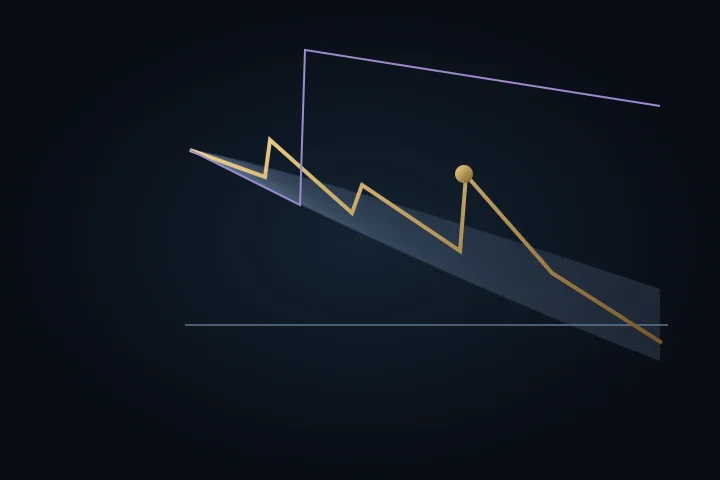
Gap & “Overdue” Tracker

A number waits 7 draws on average; 5% of the time it waits 21 or more. It is never “due”.
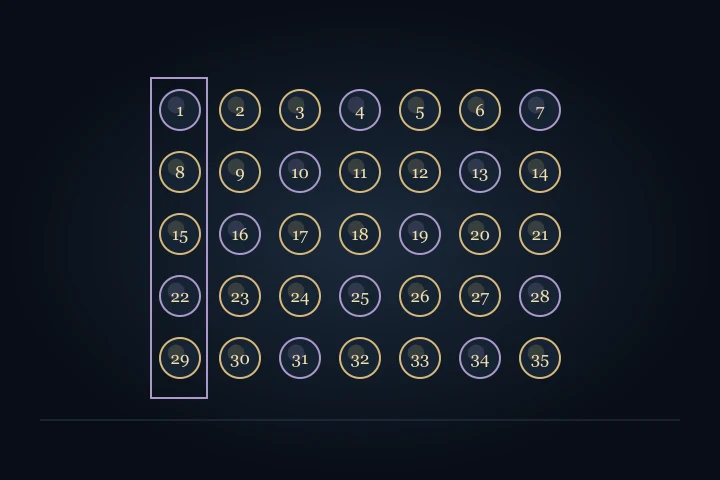
Sum Distribution

The 7 numbers add up to about 179, give or take 36. Most tickets sit in that bell — and so do most draws.
Consecutive Numbers Surprise

61.6% of draws contain two numbers side by side. That is the rules talking, not luck.
Harmony Matrix

1,225 possible pairs, each expected together 1.6 times so far — and about 12 will look “special” by chance alone.
Number Constellation

All 50 numbers as a constellation of who appeared with whom — indistinguishable from a shuffled sky.

Carry-over / Déjà Vu

68% of draws repeat a number from the draw before. A whole draw repeating: 0.0% likely by now.
Delta Space

Sorted, the numbers sit about 6.4 apart on average — and every “spread” you can name is exactly as likely as every other.
The other 43 tools for Québec Max

Coverage Race

It takes about 31 draws for every one of the 50 numbers to appear at least once. The last few are the slow ones.
Draw Fingerprints

99,884,400 possible tickets. Every one has a face — and a typicality score you can look up.
Randomness Observatory

Seven independent tests of randomness run live against all 96 draws. Any of them can fail; watch whether they do.

Positional Ribbons

The lowest number lands near 6, the highest near 45. Position is a property of sorting, not of the balls.

Cross-Lottery Mirror

7/50 rescaled onto the same axes as every other game here. One law, many machines.

Six true stories

Six documented cases of a beaten lottery. Not one involved patterns in past draws.

Cultural Numbers Atlas

What the world believes about 7, 8, 13 and 17 — and what every machine says back.

The Unpopular Numbers Edge

At 30 million tickets, an average line keeps about 86% of a jackpot it wins. Unpopular numbers keep more — and still lose money.
Wheel Workshop

A full wheel of 10 numbers here is 120 tickets. A guarantee is real; a profit is not.

Myth Rebuttal

Five folk claims about 7/50 games, each answered with the closed form that kills it — never a tip for the next draw.

Take the record with youRSSJSON feedCSV, every drawDraw nights, in your calendarAPI
Rule eras

  • 7/52 era · since Apr 2026 · 49 drawscurrent
  • 7/50 era · May 2025 – Apr 2026 · 96 drawsreading this one

Pattern Court

Lock a past-only rule, score it on later draws, and compare every hit with the exact 7-of-50 overlap law.

Draw Rank Stream

Every one of 99,884,400 possible draws receives a unique rank; a fair stream fills that line uniformly.

Anytime Bias Watch

Monitor all 50 balls after every draw without optional-stopping tricks; evidence 20× is the predeclared 5% alarm line.

Whole-Draw Drift

Compare adjacent eras as complete 7-ball sets, so no “interesting” number or summary is chosen after looking.

Conditional Harmony

Shuffle while preserving all 50 ball totals and every draw size; only pair structure beyond solo frequency remains.

Residue Kaleidoscope

Odd/even is modulo 2. Turn the dial through 10 and compare each colour recipe with its exact finite-pool law.

Crowd Calibration Lab

Prize-table winner counts can infer ticket exposure and test whether this game follows the literature-based crowd model.

Calibration Forge

Benchmark six detectors at 100 and 400 synthetic 7-of-50 draws: false alarms beside power, before interpreting history.

Johnson Spectrum

Resolve this 7-of-50 history into single-ball, pair-after-single, and all-degree structural bands.

Compression Lab

Test whether whole-draw ranks, successive overlaps, or spacings compress more than shuffled chronology.

Forecast Arena

Let hot, cold, overdue, and repeat models learn on discovery draws, then score one locked challenger on untouched 7-of-50 outcomes.

Exchangeability Watch

Monitor complete 7-ball draws with conformal evidence that remains valid whenever the watch is inspected.

Gap Uniformizer

Map every completed wait through its geometric 7/50 law, then test the common 0–1 residual ruler.

Sharing Map

A number a date could have produced is held 28% more often here than an average one, so the same win is split more ways.

Return Ledger

Read what this game paid back across 96 draws, and every night it paid out more than it took — always visible only afterwards.

Rule-Change Ledger

Its jackpot is one chance in 99,884,400 today — see every rule change that made it so, and by how much each one lengthened the odds.

Machine Room

Where a game publishes which drum and which set of balls drew it, each set is tested on its own here — the only place a physical fault could hide.

Calendar Court

Six ways of splitting the calendar — weekday, month, part of the month, holiday, slot, machine change — each asking whether this game's draws differ from the rest of their own history.

World Fairness Board

Every game this site holds, put through the same three fairness tests — this one among them, with a false-discovery pass across the whole board.

Regression Ledger

Replay this game from the start and record everything that ever passed 3.29 standard deviations — the threshold 50 numbers at once demands — then read what happened to it next.

Lottery Design Studio

Open the studio on this game’s own 7-from-50, then move one number and watch the 1-in-99,884,400 jackpot, the sum curve and the break-even prize move together.

Chance Detective

Three simulated machines. Which would you investigate?

The Headline Factory

Find a miracle in a fair archive, then count the searches that found it.

The Crowd Through Time

Does the estimated preference for birthday numbers change over time or with jackpots?

Thirty Years of Saturdays

One hypothetical routine, thousands of lives, and the full spread of outcomes.

Pattern Recipe Lab

Combine primes, squares, Fibonacci numbers and sums. Count how much of chance your recipe describes.

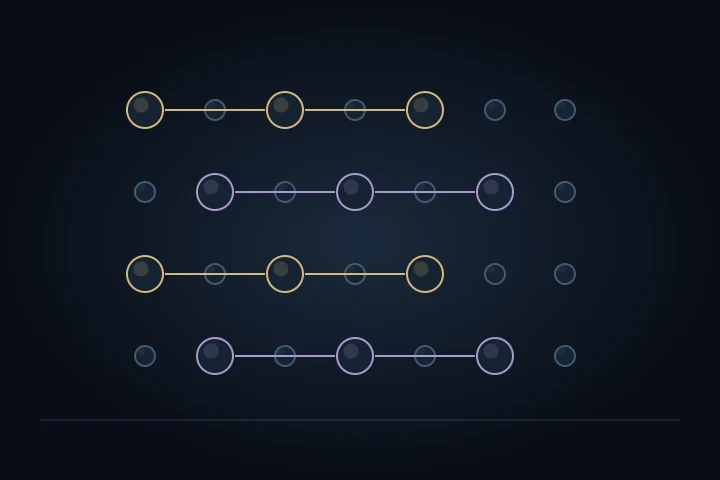
Arithmetic Progression Garden

Find equal steps and mirror pairs in history, then grow a fair comparison.

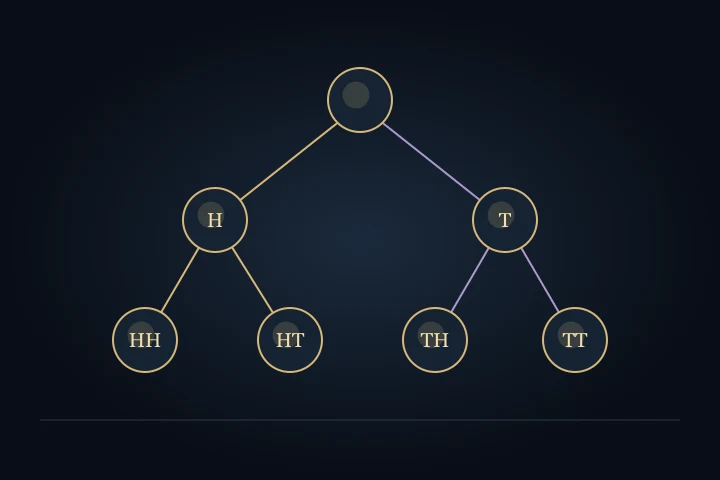
Same Odds, Different Waits

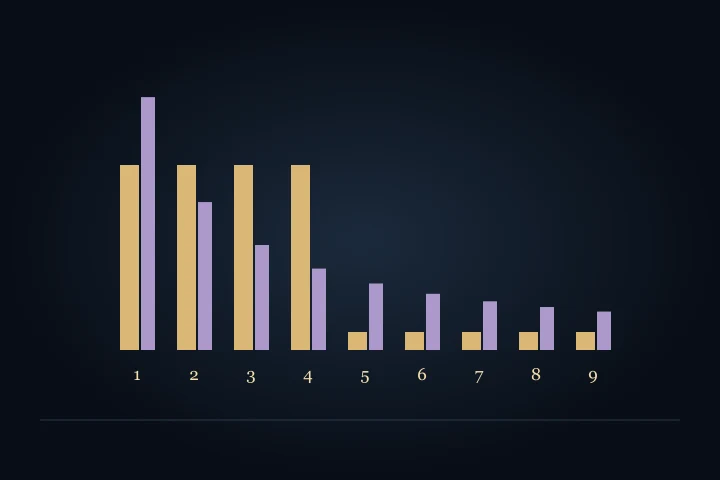
HH and HT each have a one-in-four chance in two flips. Why does one take longer to arrive?

Wrong Formula Lab

Give fair numbers the wrong baseline and watch an innocent pattern appear.

Euler’s Lottery Desk

From a 1767 paper to every possible arrangement of consecutive runs.

Casanova’s Risky Treasury

A profitable lottery can still run out of money. Explore a fictional treasury inspired by history.

The Lottery That Chose Lives

Read the 1969 and 1970 US draft drawings through their actual calendar ranks.

The Museum Built by Chance

A royal proposal, an annuity ticket and a national collection: three objects from lottery history.

Digit Laboratory

This is a without-replacement ball game; the Digit Laboratory is for Pick 3 and Pick 4.

Not for this game
Chernoff Map

The Chernoff Map reads the straight tier of a digit game, which counts tickets on one exact number; a ball game has no such row.

Not for this game

Balls versus RNG

This game draws once a day, so it has no second draw to compare its first with.

Not for this game

This draw, read by every tool

What the site’s explorations say about the numbers drawn on 21 April 2026 — each beside what chance predicted. None of it says anything about the next draw.

65oddordinary

How ordinary this draw is

Scored 65 of 100 across six shape features — more typical than about 85% of every possible ticket.

  • sum39th
  • odd65th
  • low65th
  • widest gap57th
  • neighbours60th
  • spread99th
Draw Fingerprints →

Each number, as it stood before this draw

Times drawn before — chance expected 13 of each

115times
1213times
1518times
2116times
3413times
3512times
5013times

Every number was expected about that many times after 95 draws, and they scatter around it. Warm means more than expected, cool means fewer — and a cold number arriving is exactly what cold numbers do.

Frequency Explorer →

Its nearest twin

Shares 3 of 7 numbers (1, 15, 35) with the draw of 24 February 2026 — its closest relative in 95 draws. Chance gave a match this close a 99% likelihood somewhere in that history.

From the draw just before (17 April 2026): nothing carried over. Chance says 68% of draws repeat at least one number.

Carry-over / Déjà Vu →

Sum and shape

168

The numbers add up to 168 — the 38th percentile of all possible tickets, around a middle of 179. Side-by-side numbers: 34–35. 62% of draws have at least one such pair.

Sum Distribution →

The longest wait in this draw

35 had not appeared for 13 draws. A number waits about 7 on average, and a wait this long was not a signal — the machine has no memory of it.

Gap & “Overdue” Tracker →

How many people held it

A line like this is played about 0.8× as often as an average ticket — less popular than most. At 30 million tickets sold, a winner on these numbers would keep about 89% of the jackpot.

Illustrative model, calibrated to published studies — not live sales.

The Unpopular Numbers Edge →

Prize breakdown · 2026-10-09

  • Lines in play≈ 2.3Mas the winner counts imply
  • Paid outCA$455.4Kto 184k winning lines
  • Won something1 in 13lines took a prize
  • Match 70 winnerschance said 0.02

Where the money went

  • Match 513%CA$58.8K
  • Match 433%CA$151.8K
  • Match 3 + Bonus35%CA$159.0K
  • 3 other tiers19%CA$85.8K
Tier1101001k10k100k1MWinners1101001k10k100k1M10MPrize each
  1. Match 70≈ 0.02 by chanceCA$2,000,000
  2. Match 67≈ 7.0 by chanceCA$4,000
  3. Match 5470≈ 443 by chanceCA$125
  4. Match 410,118≈ 10k by chanceCA$15.00
  5. Match 3100,972≈ 101k by chance—
  6. Match 6 + Bonus0CA$200,000
  7. Match 5 + Bonus22CA$850
  8. Match 4 + Bonus782CA$50.00
  9. Match 3 + Bonus10,603CA$15.00
  10. Match 2 + Bonus61,521—
  • Winners, log scale
  • Prize each, log scale
  • Where chance put the count

The rings take the ≈2.3M lines the counts imply and assume an evenly spread crowd. Furthest from that: Match 4 — 10,118 winners, 0% more than the 10k an even spread gives. The real crowd and an even spread agreed closely on this draw.

Show the published table
MatchWinnersPrize each
Match 70CA$2,000,000
Match 6 + Bonus0CA$200,000
Match 67CA$4,000
Match 5 + Bonus22CA$850
Match 5470CA$125
Match 4 + Bonus782CA$50.00
Match 410,118CA$15.00
Match 3 + Bonus10,603CA$15.00
Match 3100,972—
Match 2 + Bonus61,521—

Recent draws

Browse every month →145 draws on record, Tuesday, 20 May 2025 to Friday, 9 October 2026.
DateNumbersConfidence
  • 2026-10-09
    1. 3
    2. 8
    3. 9
    4. 16
    5. 18
    6. 22
    7. 44
    8. 6
    Single sourceearlier rules
  • 2026-10-06
    1. 2
    2. 20
    3. 22
    4. 27
    5. 32
    6. 35
    7. 39
    8. 46
    Single sourceearlier rules
  • 2026-10-02
    1. 8
    2. 17
    3. 25
    4. 30
    5. 35
    6. 45
    7. 51
    8. 47
    Single sourceearlier rules
  • 2026-09-29
    1. 14
    2. 18
    3. 22
    4. 29
    5. 40
    6. 45
    7. 49
    8. 44
    Single sourceearlier rules
  • 2026-09-25
    1. 12
    2. 14
    3. 21
    4. 27
    5. 36
    6. 42
    7. 43
    Single sourceearlier rules
  • 2026-09-22
    1. 9
    2. 14
    3. 27
    4. 33
    5. 37
    6. 39
    7. 42
    8. 50
    Single sourceearlier rules
  • 2026-09-18
    1. 4
    2. 9
    3. 11
    4. 26
    5. 37
    6. 40
    7. 50
    8. 38
    Single sourceearlier rules
  • 2026-09-15
    1. 6
    2. 18
    3. 21
    4. 23
    5. 26
    6. 33
    7. 34
    8. 48
    Single sourceearlier rules
  • 2026-09-11
    1. 7
    2. 8
    3. 11
    4. 30
    5. 43
    6. 45
    7. 47
    8. 4
    Single sourceearlier rules
  • 2026-09-08
    1. 24
    2. 30
    3. 33
    4. 34
    5. 36
    6. 44
    7. 47
    8. 41
    Single sourceearlier rules
  • 2026-09-04
    1. 4
    2. 15
    3. 22
    4. 31
    5. 32
    6. 41
    7. 52
    Single sourceearlier rules
  • 2026-09-01
    1. 13
    2. 25
    3. 31
    4. 36
    5. 49
    6. 50
    7. 52
    Single sourceearlier rules